The construction industry is undergoing a major transformation with the rise of 3D printing. Once science fiction, it now produces everything from medical devices and home décor to vehicles and aircraft components. This technology offers a faster, more cost‑effective, and sustainable alternative to traditional methods by reducing material waste and labor. Building the world has entered the midst of a technological revolution.
1. Understanding 3D Printing in Construction
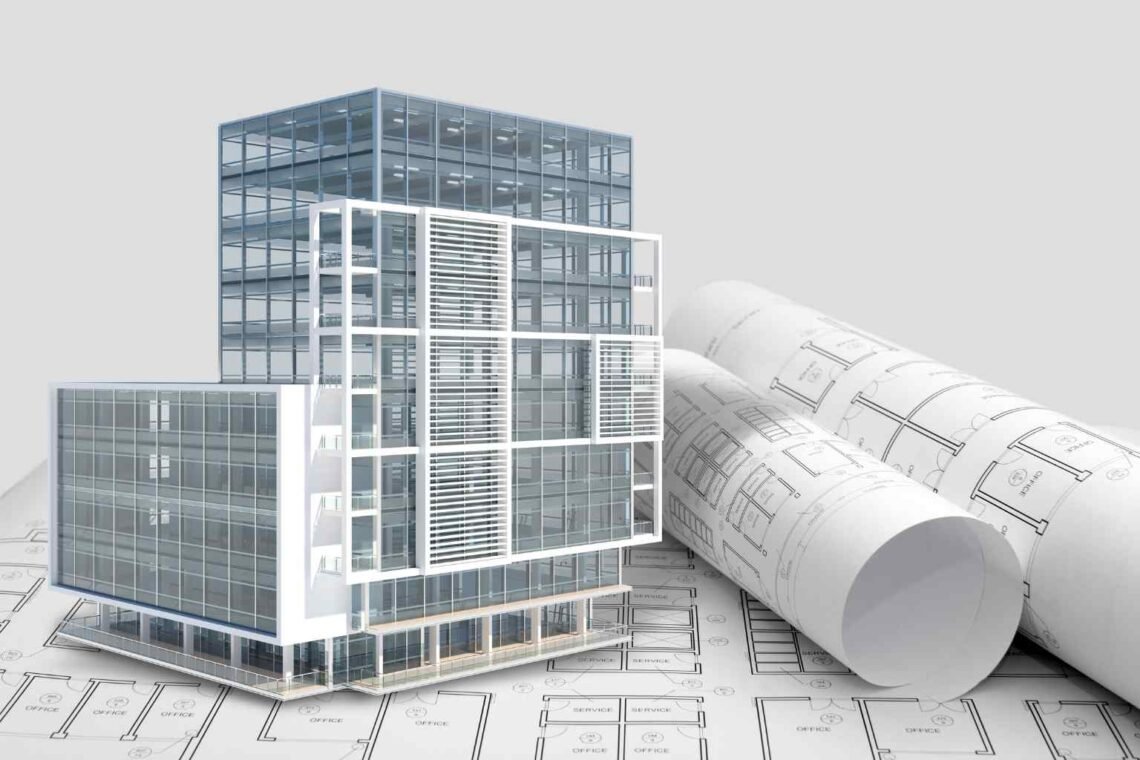
3D printing in construction refers to various processes by which three dimensional objects are constructed by a computer-guided machine layer by layer, including concrete as well as other materials (polymers, composites). The process starts with a digital design or a Building Information Model (BIM) that informs the printer how to build exact structural components. Such approach reduces subjective aspects by giving utmost preference to automatic extraction over other methods.
2. What is 3D Printing for Construction And How Does it Work?
The process with respect to 3D printing in construction can be summarized as follows:
- Creation of a digital design: the building is designed by the architect and engineer with dedicated 3D modeling software.
- Sample Preparation: The printer is filled with concrete mixes, or other print material.
- Printing/Building Layer by layer: The printer adds material as per the digital plan of the object, so it creates/prints structure one level at a time.
- Curing & Finishing: Following printing, the structure is cured and finished with required fittings and insulation.
This way of construction is highly efficient, and whole houses can be printed within a few days.
3. Benefits to Construction using 3D Printing
5 Reasons Construction Will Never Be the Same Thanks to 3D Printing The process of constructing buildings is often expensive and time-consuming, among other things. Here’s how 3D printing can change that.
- Velocity: Help you complete your project very fast.
- Cost Saving: Labour saving and cost-effective.
- Accuracy: Accurately reproduces design, with very little room for human error.
- Sustainability: Is waste-reducing and supports eco-materials.
- Design Freedom: Allows for complicated architectural designs that are not possible with conventional methods.
These advantages would rewrite the rules of 3D printing for developers, particularly in affordable housing and infrastructure.
4. 3D CP Materials Used in 3D Construction Printing
Varying materials are employed according to the type of structure and design needs. Commonly used options include:
- Concrete Mixes: For fast-setting and strength.
- Eco Synthetics Recycled Plastics: Earth aware options for low weight buildings.
- Composites: A combination of plastics and fibers to create a strong durable product.
- Metal Alloys: Applied to industrial or (bridge) construction.
Additionally, the advent of superior and ecologically friendly materials will continue to drive greater sustainability in 3D printing.
5. Sustainability and Environmental Impact
3D printing is environmentally friendly in that it minimizes waste and carbon emissions, as well as the use of recycled materials. Because the technique is so exact, it spends only as much material as is necessary. Additionally, 3D-printed structures are often energy-efficient and can be designed to include things like improved insulation and natural ventilation. That means the technology is perfect for advancing green building worldwide.
6. Reducing Labor and Time Costs
One of the key benefits that 3D printing has to offer is the reduction in both labor and time. Old school construction takes scores of workers and months to complete a project; 3D printing can accomplish the same tasks with a fraction of the manpower in a fraction of the time. For example, small houses can be printed out in as little as 24 to 48 hours which diminishes the cost, and reliance on human deployment.
7. 3D Printing in Affordable Housing
One of the biggest winners of 3D printing technology is affordable housing. Governments and organizations across the globe are experimenting with 3D printing as a solution for housing shortages. The low costs and rapid construction times, means that safe, robust, cheap housing can be built for poorer communities. Projects in India, Mexico and the Netherlands have already shown its ability to solve urban housing problems.
8. Design Innovation and Architectural Freedom
3D printing has enabled architects to work on complex and futuristic designs never before dreamed of due to complexity or price. Faceted forms, curving walls and custom shapes can now be printed with ease. This artistic liberty not only helps to beautify but also assists in structural effectiveness by maximizing the materials and design flow.
9. Global Adoption and Real-World Examples
3D printing is being implemented on a global scale by construction companies with an eye toward the future. Examples include:
- ICON (USA): Constructing 3D-printed homes for affordable housing schemes.
- Apis Cor (Russia): Built the first whole 3D-printed house in just 24 hours.
- COBOD (Denmark): Manufacturing large printers for commercial construction.
- L&T Construction (India): 3D concrete printing for urban projects on anvil.
These real-world uses demonstrate how 3D printing is moving from a experimental to mainstream industry.
10. Challenges and Prospects of Construction in 3D
But although the prospects are good for 3-D printing in construction, there are some hurdles equipment costs, limited building codes and a shortage of skilled operators. Yet, as technology progresses. these objections are being addressed. In all likelihood, the future will involve hybrid construction practices – ones where traditional techniques and 3D printing are used side-by-side to produce sustainable, efficient buildings. Governments and developers around the world are already investing heavily in research and innovation to render 3D construction scalable.
Key Takeaways
- 3D printing relies on digital designs to build structures layer by layer.
- It provides a number of advantages in terms of speed, accuracy and durability.
- The substances used are concrete, recycled polymers and composite products.
- The technology is being used to address a global housing shortage.
- 3D printing is the future of sustainable construction.
Conclusion
With automation, sustainability, and innovation 3D printing is changing horizons of construction industry. It saves time, money and waste and allows architects to unleash their imagination like never before. As the technology evolves, 3D printing will be instrumental in building the cities of the future to construct smarter, faster and greener.
FAQs:
Q1. What is 3D printed construction?
It is a method in which computer-driven machines construct structures layer by layer, frequently from materials such as concrete or composites.
Q2. Let’s say you want to print a house, How long would that take?
A 3D-printed house, depending on size and design, can be built in 24 to 72 hours.
Q3. Is the 3D printing of construction cost-effective?
Yes, because it greatly decreases labor, material waste and the duration of your project.
Q4. What are buildings made from in 3D printing?
Frequently used materials are concrete, recycled plastics, metal alloys and polymer composites.
Q5. How 3D printing will change the future of construction
The big future is in widespread use for affordable housing, infrastructure, and sustainable design.