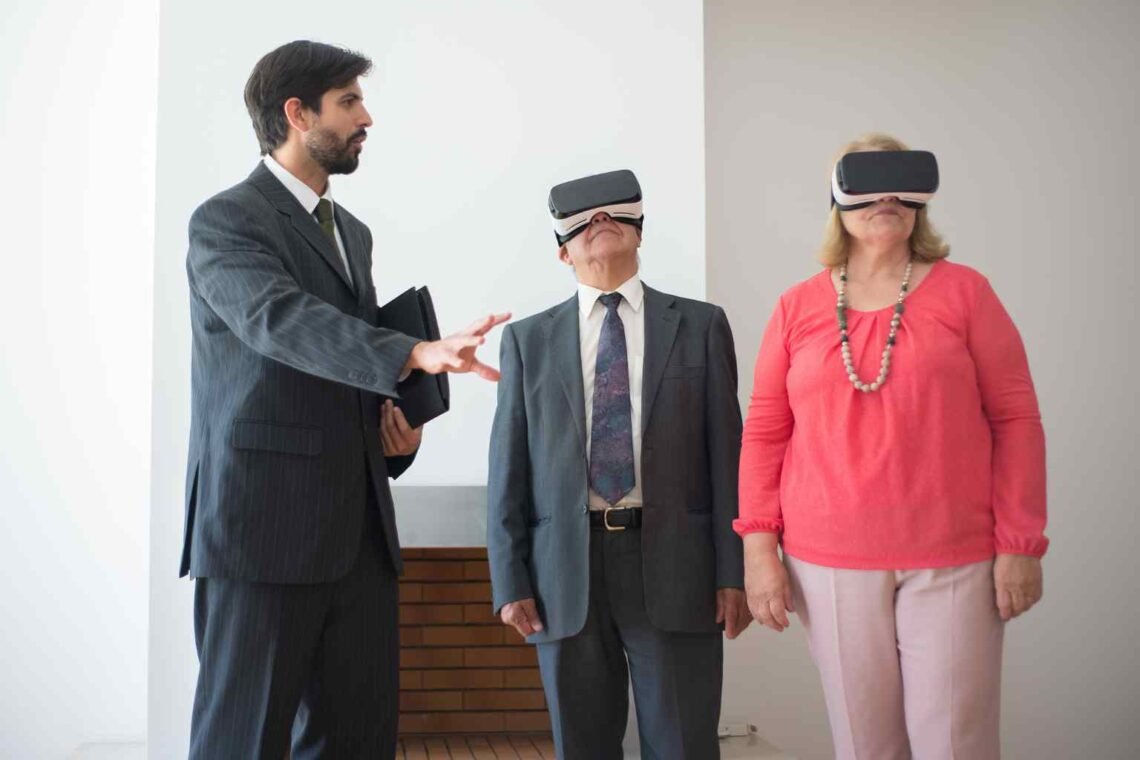
The way Americans shop for homes is undergoing a transformation. And guess what? It’s happening online. Virtual Reality (VR): Immersive viewing of your future house Buyers are now looking for an extraordinary viewing experience when it comes to properties. With the help of a VR headset – or even a smartphone in some cases – prospective buyers can step into rooms, see layout plans and experience spaces as if they were there. This immersive experience is transforming the way people buy homes, shortening the decision-making process and giving buyers more confidence.
1. The Evolution of Home Buying
Historically, purchasing a home required endless visits, huge travel times and reliance on still photos or videos. These processes frequently failed to present the actual “feel” of a piece. Thanks to Virtual Reality, today’s buyers can visit scores of homes in a sitting without unglueing from the living room sofa. Not only does this electronic leap make searching for homes easier, but it also allows real estate agents to showcase properties to clients on the other side of the planet.
2. What Are Virtual Reality Home Tours?
A Virtual Reality home tour applies 3D modeling and panoramic imaging to develop a realistic digital recreation of the property. Viewers who strap on VR headsets, or tune in with their smartphones and computers are able to “walk through” a property, virtually visiting each nook and cranny in real time. These tours are interactive, meaning that users can look around, zoom in and even open virtual doors or windows for an experience that’s closer to being there than ever before.
3. How VR is Improving the Buying Experience
Virtual Reality gives potential purchasers a more in-depth glimpse of the property. They can evaluate the room sizes, light sources, interior style and even mentally place furniture. The virtual reality experiences help buyers create an emotional attachment to spaces and make confident decisions about purchasing more quickly. Then there’s the fact that VR has no respect for geography, meaning overseas buyers can tour properties via data.
4. How Real Estate Agents And Developers Can Benefit
The VR technology is being utilized by real estate agents and developers to help them market and 10even sell their properties easier. The key advantages include:
- Extended Coverage: VR makes it possible to present properties for a worldwide market.
- Time Saver: Agents can serve many clients without having to schedule repeated physical tours.
- Better Promotion: Engaging graphics draw more interested buyers.
- Cost-Effective: No need for multiple site visits or physical staging means lower costs.
- Increased Conversions: Faster decision making of clients because of the more realistic visual impression.
And these advantages are what make VR ideal for property marketing in today’s day and age.
5. 3D Visualization and Design Simulation
With VR Dashboards, developers and designers can develop virtual models of their new buildings being constructed. Purchasers can see finished space years before the final build. From types of flooring to wall colors, every design detail can be virtually sculpted and previewed. This is a value-added offering that adds transparency and gives confidence to buyers since the can now see exactly what they are buying before it is even built.
6. Virtual Reality in Market of Luxury Real Estate
Luxury real estate developers are the first to jump on VR tech in order to appeal to high-roller buyers. Classy homes always have the most interesting architecture with luxurious interiors that cannot be fully described by words. Through VR clients from around the world can be shown a personalized tour, the minutest of property details and even the nearest neighbourhoods. The technology removes the barrier of distance and can give you a greater sense of immersion than a regular photo ever could.
7. Integration with Augmented Reality (AR)
VR is a tool for the creation of immersive environments, whereas in AR the user remains in their physical reality, and interactive objects are overlaid over this reality. Combine all this technology and it make the experience of viewing a property even more compelling. As part of the buying process, consumers can hold up their smartphones to a blueprint of a home to turn it into a 3D model or employ augmented reality to see what furniture would look like in various rooms. By integrating the AR and VR for smarter and engaging homes exploration.
8. Accessibility and Convenience for Buyers
For people with tight schedules and out of town buyers, VR home tours are convenient like no other. They don’t need to travel or rearrange schedules, they can look through dozens of homes on the internet. Several companies now offer tours through regular web browsers, no expensive equipment necessary. This access enables any buyer, from anywhere, to seamlessly explore properties.
9. Barriers to Entry in VR for Real Estate
AC: VR has some very clear advantages but it comes with a few challenges:
- High expenses toward developing elaborated 3D models
- Lack of access to VR headsets in certain areas
- Requirement for trained professionals to create and distribute VR content
- Connectivity issues affecting smooth viewing experiences
But, with technology getting cheaper and faster internet connections proliferating, the walls are crumbling.
10. Virtual Reality in Real Estate: The Future of Home Trade
Immersive experiences are the future of real estate. It won’t be long until Virtual Reality immerses with Artificial Intelligence (AI) to provide custom tours according a buyers preferences. Shoppers will be able to engage with virtual agents, explore smart home features, and even simulate various weather patterns or lighting conditions. But as VR becomes a more popular and affordable technology, homeselling is going to change dramatically, from tours to details of the design process (ever taken a tour with an iPad?) as people experience increasingly digitized showings becoming ever richer experiences.
Key Takeaways
- Virtual Reality even allows for buyers to tour properties from a distance with startling realism.
- This saves time, costs less and makes better decisions.
- Developers are also using VR to promote works in progress and envisioning design options.
- Augmented Reality compatibility means that even greater depth of personalisation and progression can be seen in the game.
- Realty meets virtual reality The forthcoming vanguard of real estate will see VR, AI and smart technology converge to give buyers a streamlined experience.
Conclusion
Virtual Reality is revolutionizing trip to home ownership, by making homes come alive in ways we never thought possible. It’s efficient, it’s trust-building, and it streamlines the process for buyers and sellers. While the real estate industry is modernizing, VR home tours will be how we do things in a connected world.
FAQs:
Q1. What is a Virtual Reality house tour?
It is a 3D digital simulation that enables buyers to virtually tour properties using VR headsets, smartphones or computers.
Q2. How is VR assisting real estate agents?
It saves time, minimizes physical rounds and brings more buyers through experiential gaming.
Q3. Can buyers view properties under construction using VR?
Yes, developers use VR models to showcase completed designs before construction is finished.
Q4. Is VR costly for the small real estate businesses?
As technology becomes more democreaticized, costs are plummeting and VR is now affordable for mid-sized and even small agencies.
Q5. What is the future of VR in real estate?
In the future: Let’s add AI and AR for customized, interactive virtual experiences filled with data.